
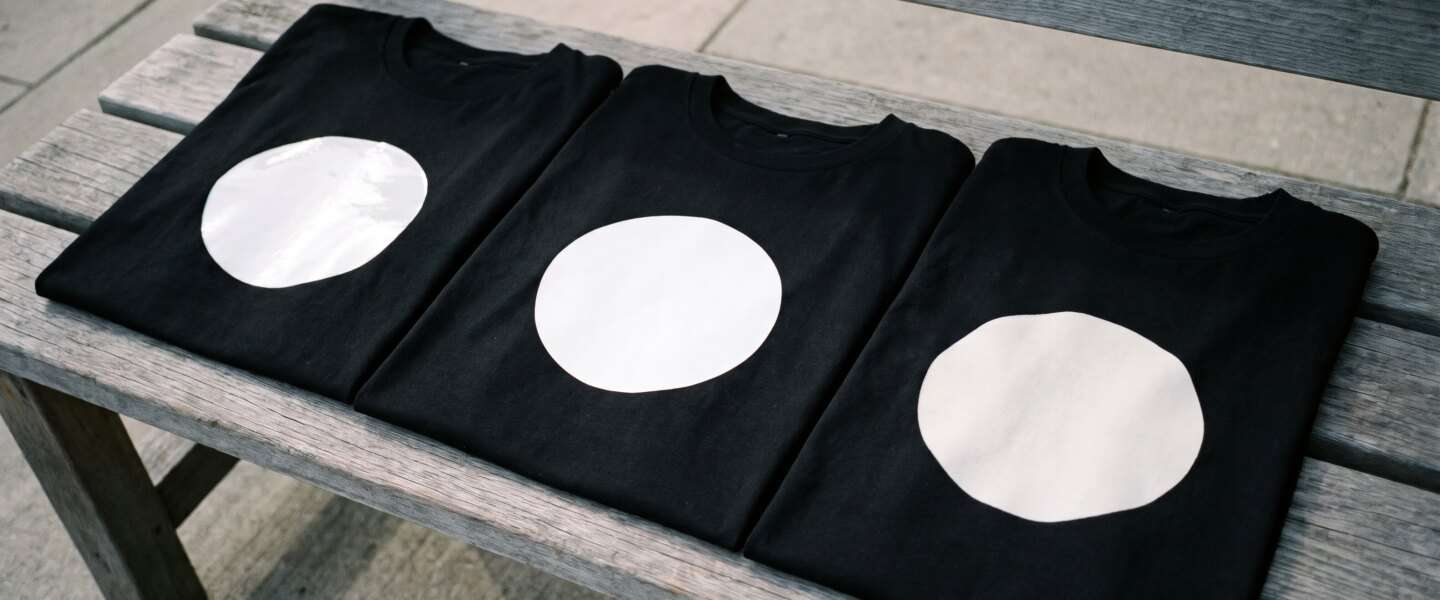
A soft print is a water-based or discharge screen print on 100 per cent cotton; nothing else gets you that soaked-in feel. Plastisol sits on top as a cured PVC film, water-based ink soaks into the fibre, and discharge strips the dye out and leaves pigment in its place. Below is what each feels like, what it costs in opacity and colour, the makers' cure figures, and where a DTF transfer sits against all three.
Plastisol: the print that sits on top
Plastisol is PVC resin suspended in plasticiser. It does not dry in the air at all, so it can sit in a screen for a whole shift, and it only becomes a solid film when the whole ink deposit reaches full cure. Fujifilm Sericol's product sheet for its plastisol range puts that at 160°C, with every product on the sheet rated wash fast up to 60°C once cured (Fujifilm Sericol, Special Plastisol Inks and Additives, sheet 2959/C). That cure is the whole reliability story. An undercured plastisol print cracks and washes out; a properly cured one outlasts the shirt.
Because the ink stays on the surface, it is opaque. A white plastisol on a black tee comes out fully white rather than grey, which is why nearly every dark-garment screen print you have ever owned was plastisol over a flashed white underbase. The cost of that opacity is hand: you can feel the print as a slightly raised, slightly rubbery layer. The same Fujifilm sheet offers a soft hand base that can be added at up to 80 per cent, with a matching loss of opacity. Softer or more opaque; you do not get both from one ink.
Plastisol prints on cotton, blends, fleece, nylon with a catalyst and polyester with a low-bleed grade. The catch on polyester is dye migration: at plastisol cure temperatures the garment dye can travel into the ink, so a white print on a red sports shirt turns pink days later. The polyester sportswear guide covers that failure and why a 135°C transfer press avoids it.
Water-based: the print that soaks in
Water-based ink is pigment carried in water with an acrylic binder. It goes through the screen into the fibre rather than onto it, the water leaves in the dryer and the binder cures around the pigment. On a white or pale cotton tee the result has almost no hand at all; run a thumb over it and you feel fabric. That is what people mean when they ask for a soft print.
Permaset's technical sheet for its Aqua range, the water-based ink most UK printers and colleges know, lists cotton, linen, hemp, silk, cotton and polyester blends, polyester and most synthetics as suitable fabrics, and gives three cure options: 2 to 3 minutes at 160°C, 5 to 6 minutes at 140°C or 8 to 9 minutes at 120°C, measured as the ink deposit temperature rather than the dryer setting (Permaset Aqua technical data, 2020). The sheet also says to drop the temperature and lengthen the time on synthetics, and to check the cure with a wash test, because the ink air dries to the touch long before it is fixed.
The limits follow from the chemistry. Water-based ink is translucent, so on a dark shirt a standard colour reads muddy; the same sheet points to its Supercover grade for opacity, and printers lay an opaque or hybrid white underneath, which brings back some of the hand you were trying to avoid. The ink also dries in the screen if the press pauses, and it needs longer in the dryer than plastisol, so a water-based job on dark garments usually costs more per shirt than the plastisol version, however the word eco reads on a quote.
Discharge: the print that removes the dye
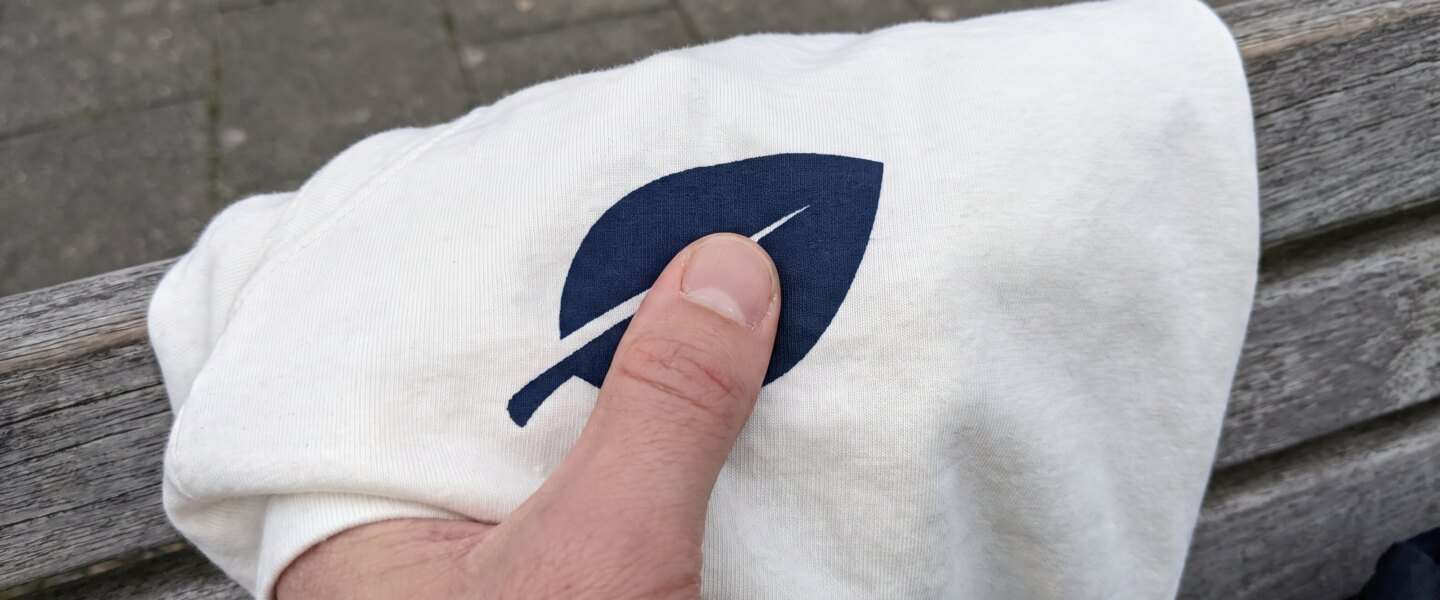
Discharge is a water-based base with an activator stirred in just before printing. In the dryer the activator breaks the bond in the reactive dye the garment was coloured with, so the printed area goes back to the cotton's natural off-white, or takes on whatever pigment was mixed into the base. Nothing sits on the surface. Matsui, which makes discharge bases, describes the result as the softest print achievable in textile screen printing (Matsui International, discharge inks), and for once the maker's wording is the plain one: it is a print you cannot feel.
The conditions are strict. MagnaColours, the UK ink maker, specifies its formaldehyde-free ULF discharge system for cotton and poly-cotton blends at 6 per cent activator, a pot life of 4 to 5 hours once activated, and a cure of 2.5 to 3 minutes at 170°C (MagnaColours, MagnaPrint Discharge ULF technical data). Older zinc formaldehyde sulfoxylate systems work the same way and release formaldehyde in the dryer, which is why the ULF grade exists and why a discharge dryer is vented.
The part buyers are never told until the shirts arrive: discharge only works where the garment was dyed with dischargeable dyes, and the shade it leaves depends on the brand, the colour and sometimes the dye lot. Avient, which makes the Wilflex and Oasis ranges, says plainly that printing and curing discharge on dischargeable garments will have variation and that some of it cannot be removed (Avient, Oasis discharge tips). A black tee from one brand discharges to cream; the same black from another goes a dirty tan; a royal blue may barely move. Ask for a strike-off on your exact blank, and accept that a Pantone match is not on offer.
Where a DTF transfer sits against all three
A DTF transfer is colour ink and a white backing printed onto film, bonded with powder adhesive, then pressed onto the garment. In feel it is closest to plastisol: a continuous film on the surface with a slight hand, which is the honest reason some people say a DTF print feels like plastic. It is thinner than a thick plastisol deposit and stretches more, but it will never feel like water-based or discharge, because it is a layer and they are not.
What it gives up in hand it gets back everywhere else. No screens, so no minimum. Full colour and photographs at the same price as a one-colour logo of the same size. The same transfer presses onto cotton, polyester, blends and nylon, at 150°C for 12 seconds and 135°C on polyester, with no dye migration risk because the press never reaches plastisol cure temperatures. On durability, the studio's 50-wash test on Gildan Softstyle tees showed no failure, and there has never been a print complaint. The four-method comparison sets DTF against the others on cost and wash life in more detail.
| Plastisol | Water-based | Discharge | DTF transfer | |
|---|---|---|---|---|
| Where the ink ends up | On the surface | In the fibre | Replaces the dye | Film on the surface |
| Hand feel | Slight raised layer | Almost none on light cotton | None | Thin flexible layer |
| Opacity on dark garments | Full, with underbase | Weak without an opaque white | Depends on the dye | Full, white printed behind |
| Fabrics | Cotton, blends, fleece, poly with low-bleed grades | Best on light 100 per cent cotton | 100 per cent reactive-dyed cotton only | Cotton, polyester, blends, nylon |
| Colour accuracy | Pantone mixable | Close on light shirts | Varies by garment | Close match from a calibrated file |
| Cure or press | 160°C full cure | 2 to 3 min at 160°C deposit | 2.5 to 3 min at 170°C | 150°C for 12 s (135°C polyester) |
| Minimum | Screen minimums apply | Screen minimums apply | Screen minimums apply | None |
Who should order which
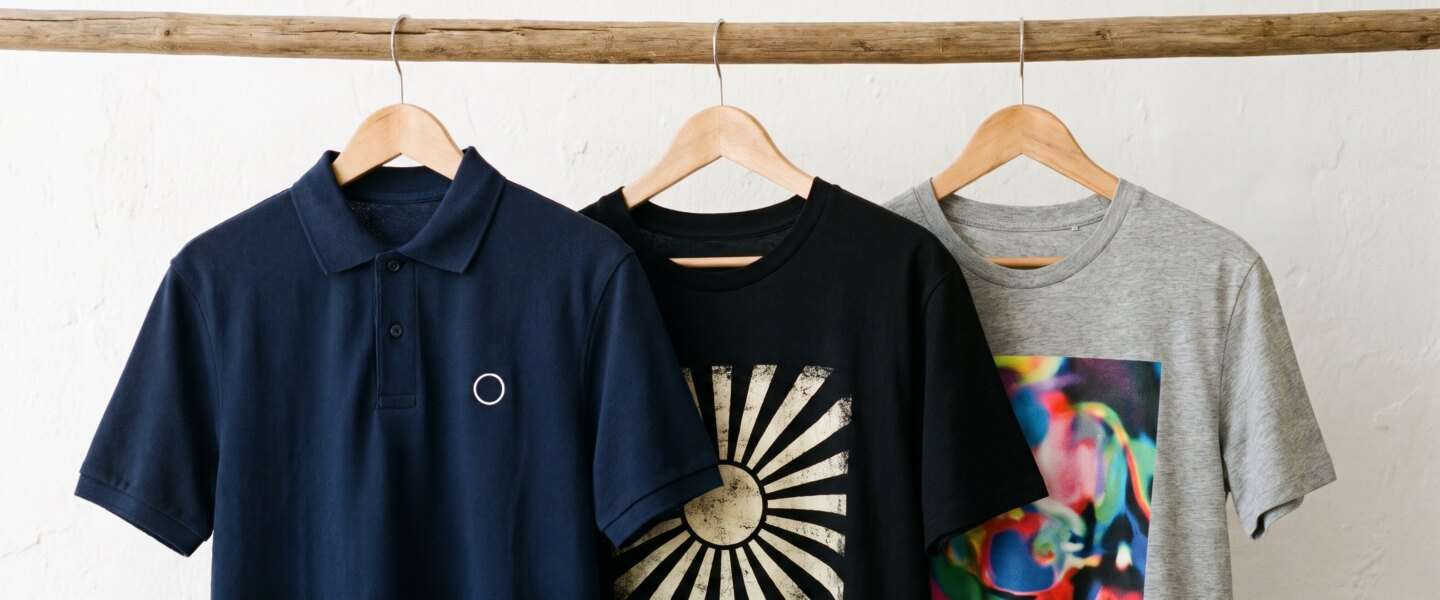
The company polo. A left-chest logo on a piqué polo wants to still look crisp after two years of 40°C washes, and nobody runs a thumb over it. Plastisol does that job, and so does embroidery, which is the usual choice for polo shirt orders; digitising is £20 once per logo, often waived over £500. Do not ask for water-based on a dark polo. The opacity is not there and the piqué texture breaks up a thin ink.
The band tee. This is the order where hand feel is the product. A one or two colour design on a black or natural cotton tee, water-based on the light shirts, discharge on the dark ones, printed in a run large enough to clear the screen charge; 50 is a sensible floor, 100 is where the unit price settles. Specify 100 per cent cotton blanks and expect the discharge shade to vary a little across the run. That variation is the vintage look people pay for. For smaller drops, the creator merch page explains how a first run works without holding stock.
The 20-piece run. Twenty shirts, four colours in the logo, three garment colours and two of them polyester: that job is a DTF transfer and nothing else makes sense. No screens, mixed garments at one price, and the screen printing minimum never comes into it. The print method guide covers the cases in between.
How to ask for it, and what to expect back
Say what you want the print to feel like, not which ink you think you want. Soft and soaked in, with a slight fade over time, on light cotton: that is water-based. Soft on a dark cotton tee with a vintage, slightly off colour: discharge. Bright, opaque, exact Pantone, on anything: plastisol. One to forty pieces, mixed garments, full colour, needed this week: DTF, which at the studio means artwork approved by 1pm and collection from 4.30pm. Send the artwork and the blank you have in mind through the quote form and say the word soft if that is what matters; a free artwork check comes with every job.
Three things no printer can give you, so do not let one promise them. A discharge print with a guaranteed Pantone match. A water-based print on a 50 per cent polyester dark hoodie that stays bright. A soft soaked-in print at a quantity of five, because the method that does soft needs a screen, and a screen needs a run. Screen work at Brandum is quoted through the screen printing page for the runs where it earns its set-up; under that, the quote comes back as DTF.
Whichever ink you end up with, the care rule for the printed garment is the same at the studio: wash below 30°C, inside out, and keep an iron off the print. Plastisol will take hotter, as Fujifilm's 60°C rating says, but a shirt washed cold lasts longest in every case.