
Pattern cutting, sampling and cut and sew for clothing brands
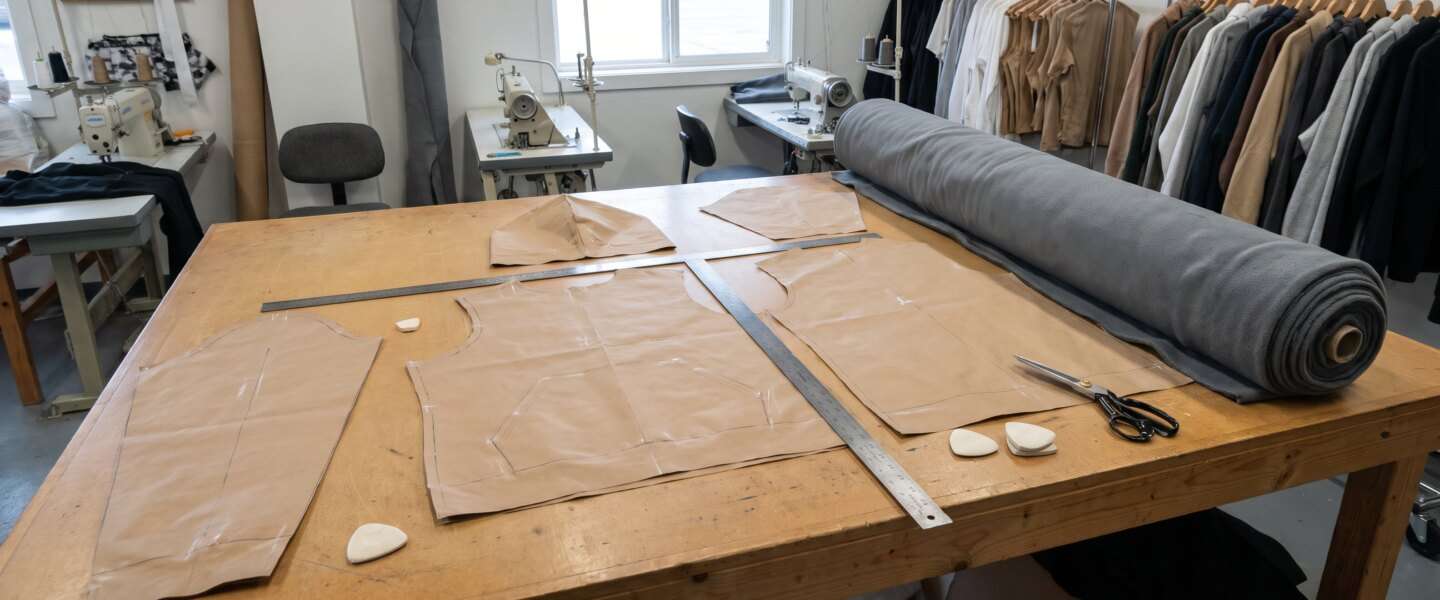
- What this covers: patterns, samples and small production runs for your own garment, not a blank.
- Where: our studio in East London, E7.
Most brands start by printing on blank garments. The next step is a garment that is yours: your own cut, fabric, labels and trims. This page explains how that process works with us, from a first pattern to a production run.
[OWNER TO CONFIRM] Before this page can be published I need the basics: do you do pattern cutting, sampling and sewing in-house, or through partners? Which garment types (tees, hoodies, joggers, jackets, tailoring)?
The stages
- Brief: what the garment is, who it is for, reference pieces and a target price.
- Pattern: a pattern cut to your measurements and graded across your size range.
- Sample: a first garment sewn from the pattern, in the real fabric where possible.
- Fit and changes: the sample is tried on, marked up and corrected.
- Production: the approved sample is made in quantity, then printed, embroidered and labelled.
Sampling
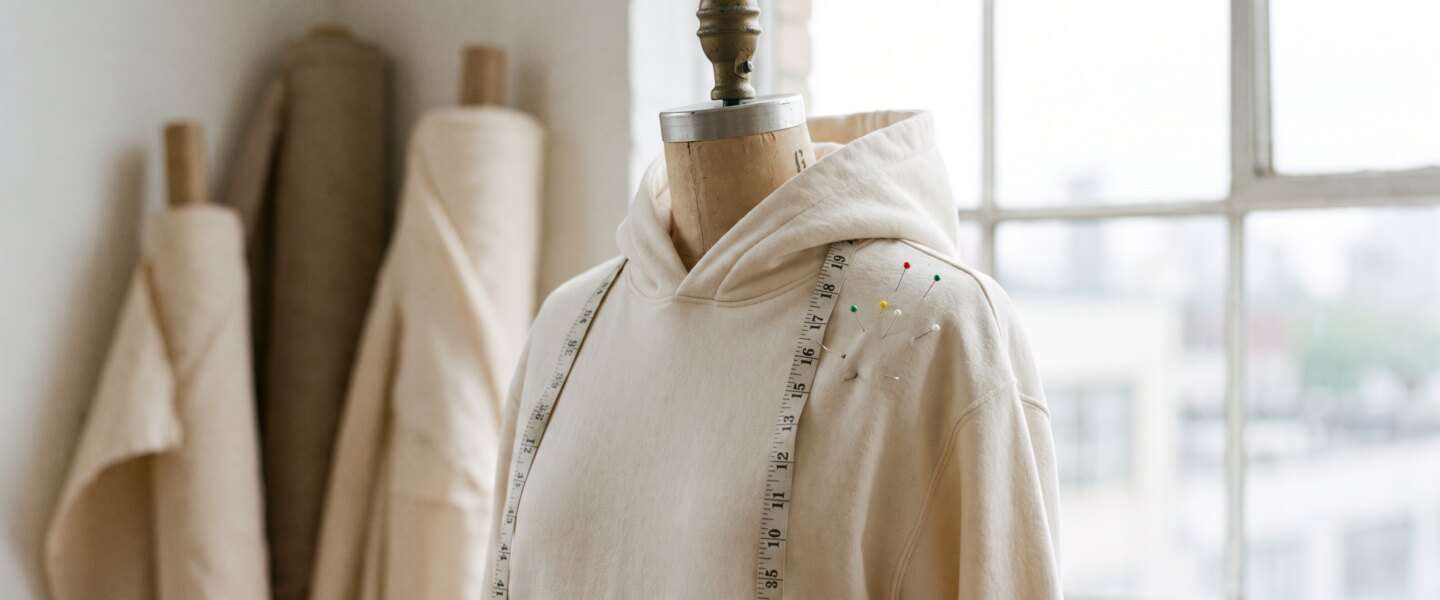
A sample exists to find problems while they are cheap to fix. Expect at least one round of changes. Bring a garment whose fit you like; it saves time on the first pattern.
[OWNER TO CONFIRM] Sampling: price for a first pattern and sample (for example a t-shirt and a hoodie), how many rounds of changes are included, and typical lead time.
Fabric and trims
The fabric decides how the garment hangs, how it prints and what it costs. We can advise on weight and composition; our guide to fabric weight in gsm is a good starting point.
[OWNER TO CONFIRM] Do you source fabric and trims for the customer, or do they supply their own? Any minimum fabric quantity?
Production runs
[OWNER TO CONFIRM] Minimum quantity per style and per colour, lead time for a first production run, and where the sewing is done (London, UK, overseas).
Printing, embroidery and labels
Because the decoration is done in the same studio, the print or embroidery is planned with the pattern. Neck labels, woven labels and swing tags are part of the same job. Relabelling blank garments for your own brand explains the labelling rules, and what the label on a garment must say covers the law.
Starting with blanks instead
If you are not ready for cut and sew, a good blank with your own print and label is a sound way to test a design. How to start a clothing brand and starting a clothing brand with DTF transfers set out that route.