
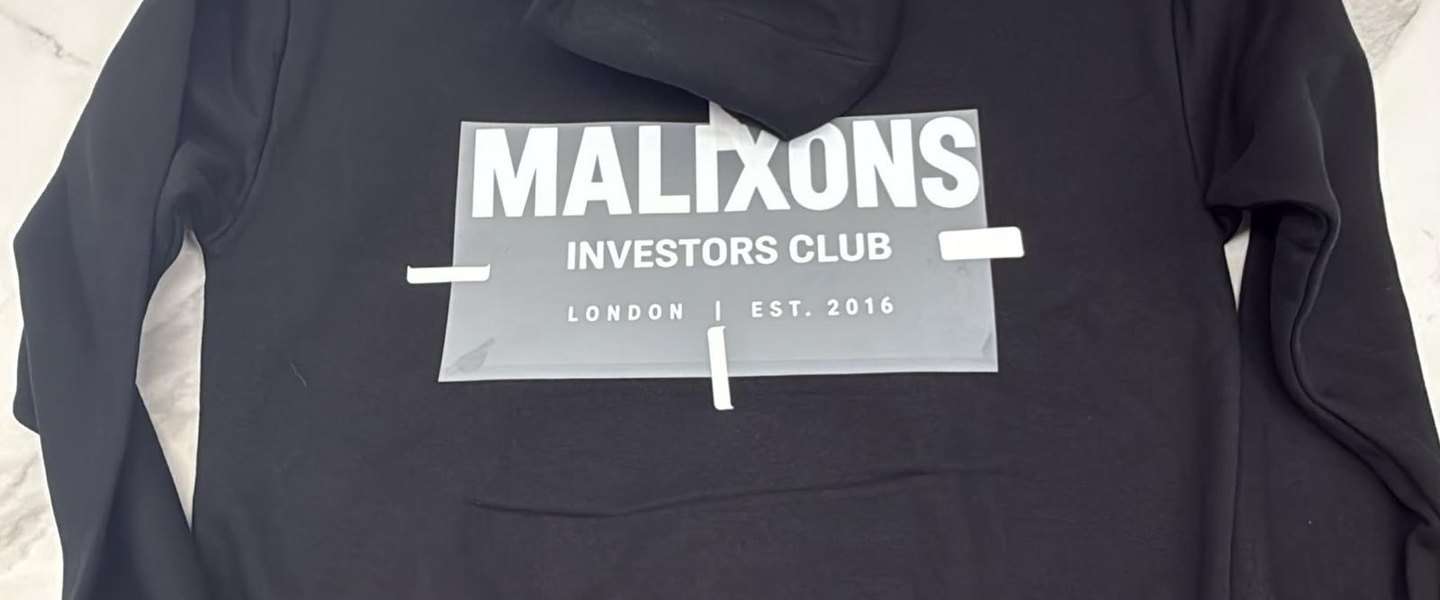
Yes, a one-person t-shirt printing side hustle can still make money in the UK as of October 2026, but only if you price the hour a shirt really takes and not just the blank and the transfer. The cost of starting is lower than it has ever been; the selling price ceiling has not moved up to match. Below: what each starting route costs at makers' own prices, where the hour goes, how to find your ceiling, the costs nobody lists, and the point where ordering DTF transfers from a trade printer beats owning anything.
The three ways a one-person operation starts, and what each costs
There are three honest routes in. Each has a different first bill and a different ceiling on what you can sell.
| Route | What you buy | Maker's published price, October 2026 | What it cannot do |
|---|---|---|---|
| Heat press plus bought-in DTF transfers | A clamshell press. Transfers arrive printed; you press them. | Hotronix MAXX Clam from £740 plus VAT in three sizes, the 40 x 50 cm at £1,250 (Stahls' UK product page). The Cricut EasyPress 3 at 30 x 25 cm is £129.99 on Cricut's UK site. | Nothing on the print side. The limit is the plate: a 30 x 25 cm EasyPress cannot press an A3 back print in one go. |
| A Cricut and heat transfer vinyl | A cutter, a press or EasyPress, rolls of HTV, a weeding tool. | Cricut Explore 5 at £199.99 on Cricut's UK site, plus the EasyPress above: about £330 before vinyl. | Photographs, gradients and anything with more than two or three colours. Every colour is a separate cut, weed and press. |
| A desktop DTF printer | An A3 printer, an oven or shaker, ink, film, powder, and a press. | Procolored lists its F13 A3 printer at $2,399 and the printer-and-oven bundle at $2,799 on its own site, in US dollars, with the powder shaker sold separately. Import VAT, duty and the press come on top. | Sit idle. The maker's own page says the printer runs a head clean every 10 hours when left powered on and uses about 1 ml of ink a day doing it. |
Route one is the one most sellers should start on. The press is the only machine that every route needs, so it is never wasted money, and the transfers are made on a wide-format machine you do not have to maintain. The HTV or DTF post covers the Cricut question in more depth; the short version is that vinyl is fine for names and one-colour logos and slow for anything else.
The hour a shirt really takes
The press cycle is the part people time. It is also the shortest part. A DTF transfer on cotton is a pre-press at 150°C for 2 seconds to drive moisture out of the fabric, a 12 second press, a 3 second pause before the peel, then a 3 second re-press over the bare print. That is under a minute including loading the shirt. Our press settings page has the full recipe, including 135°C for polyester.
Everything else is the hour. Opening the blanks and checking sizes. Lint-rolling the garment, because dust under a transfer is one of the two causes of most failures (the other is moisture, hence the pre-press). Folding, bagging, printing the label, writing the thank-you note, answering the message about whether a medium is a medium. Photographing a new design, writing the listing, editing it when it does not sell. Walking to the post office. Chasing a wholesaler for the one colour that was out of stock.
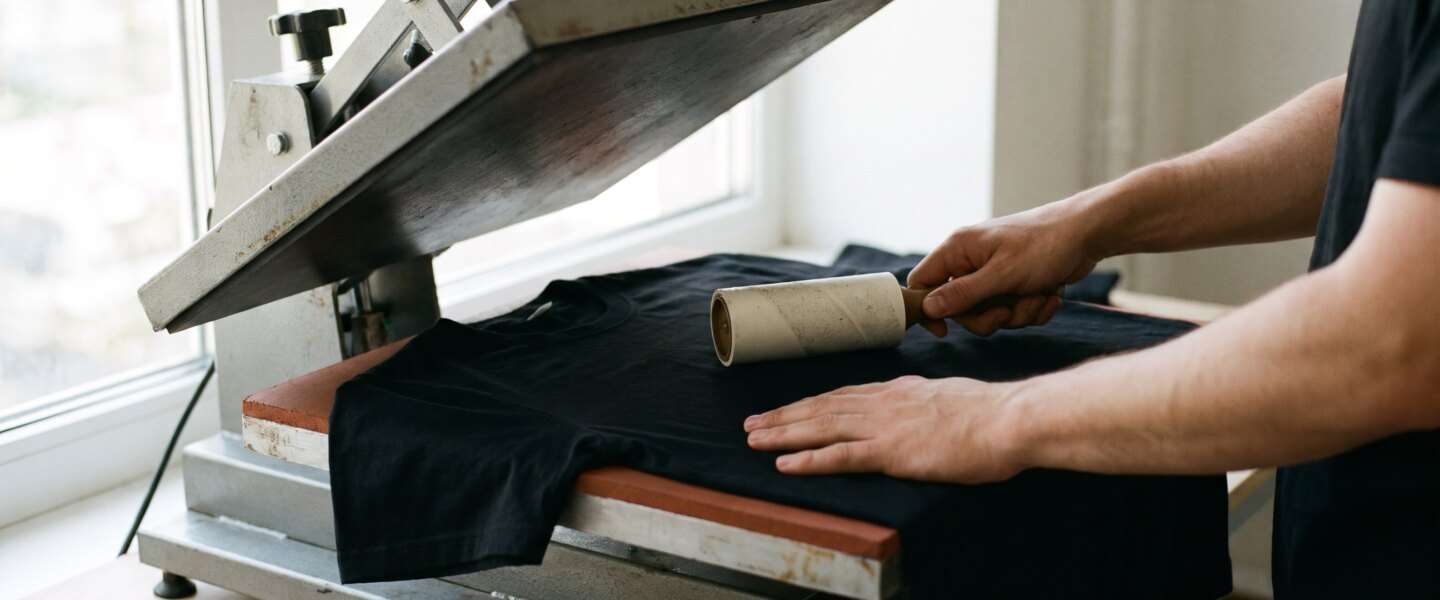
Time yourself over ten orders, from notification to drop-off, and divide. Most one-person sellers who do this find twenty to forty minutes per single-shirt order, against one minute on the press. At the UK National Living Wage that time is the biggest cost in the shirt, bigger than the blank, and a price that ignores it is a hobby that pays for its own materials.
Finding your selling price ceiling without guessing
Nobody can tell you what a printed tee sells for on Etsy or at a market in your town, and anyone who quotes a figure is quoting one niche. You find the ceiling yourself, in about an hour.
- Search the exact phrase a buyer would type for your design ("personalised stag do t shirt", "hen party tees uk", "funny dad t shirt") on Etsy with the location set to the UK. Note the price on the first twenty listings that have reviews in the last month. Ignore listings with no sales; a price nobody has paid is not a market price.
- Do the same on the marketplace you actually plan to use. Prices on a platform with 0 per cent seller fees sit lower than Etsy's because the sellers there are not paying what Etsy charges.
- For a market stall, walk the market the week before you book a pitch and read the price tickets on every clothing stall. Ask the organiser the pitch fee and the footfall; write both down.
Then take the fees off. Etsy's own UK fee policy, updated 5 October 2026, sets a transaction fee of 6.5 per cent of the item price and the postage charged, a listing fee of 0.20 US dollars per item renewed every four months, and an Offsite Ads fee of 15 per cent (12 per cent once a shop passes 10,000 dollars in a year) on any sale Etsy's adverts bring in (Etsy Fees and Payments Policy). Payment processing is on top and varies by country; check the Etsy Payments policy for the current UK rate rather than a blog figure.
Worked at a £22 listing, as arithmetic rather than a market figure: Etsy takes £1.43 in transaction fee, about 15p of listing fee, and £3.30 more if the sale came through Offsite Ads. A tee bought in at our 50-unit price of £9.50 for a Gildan 64000 with a one-colour front print leaves roughly £7.50 to £11 before the mailing bag, the postage you did not pass on, the processing fee and your time. The pricing post runs the full sheet from blank to retail.
The costs that never make it onto the spreadsheet
Returns. The Consumer Contracts Regulations 2013 exclude goods "made to the consumer's specifications or clearly personalised" from the 14-day right to cancel (regulation 28(1)(b)), so a buyer cannot send a named tee back because they changed their mind. A faulty one is a different matter. A print that peels at the first wash comes back at your cost, and the fault is almost always moisture or lint under the transfer, or a press that was never at the temperature its dial claimed.
Spoilage. A transfer placed 2 cm off centre is a ruined blank and a ruined transfer, and on a run of 20 you want two spare garments for exactly that reason. One-off sellers have no spare, so the mistake costs the blank, the transfer, the postage on a replacement blank and a day.
Fees on the postage. Etsy's 6.5 per cent applies to the postage you charge as well as the item, so free postage priced into the item and a separate postage line cost the same.
The clogged white channel. This is the cost that kills the third route. White DTF ink is a pigment suspension; it settles, and in a desktop head it clogs. Procolored's own answer is to leave the F13 powered on so it self-cleans every 10 hours at about 1 ml of ink a day. A week away with the machine off can mean a blocked white channel and a head to replace, before you have sold anything. The buy-a-DTF-printer post works the break-even properly.
Electricity, consumables, software. Small each, real together: a heat press plate heating for an evening, the mailing bags, the lint roller refills, the Cricut Access subscription at £7.49 a month on Cricut's UK site if you use its library.
When buying transfers from a trade printer beats owning anything
The honest break-even is the point where your monthly spend on transfers is higher than the monthly cost of a printer plus its ink, film, powder, waste and your maintenance time, and you print most days. Below that point, you are paying to own a problem.
Our trade printing line exists for the seller below that point. You send artwork, we print DTF transfers by the metre, and you press them on your own blanks. There is no minimum order, so a seller with three orders a week pays the same per-metre rate as one with thirty. Gang-sheet building is free: send the designs and the quantities and our team lays them out, or use the free gang sheet builder yourself and upload the file. Every job gets a free artwork check, which catches the 72 dpi logo before it becomes a blurry shirt.
Timing matters for a seller promising next-day dispatch. Artwork approved by 1pm is ready to collect from the Forest Gate studio from 4.30pm the same day, or it goes out by UK delivery at £15 per delivery address on business orders. Transfers store for months if kept flat, cool and dry; the storage post covers that.
What we will not do: copy a registered brand's logo or a football crest onto your transfers, however small the run. That is the single most common request from new sellers and the single quickest way to lose an Etsy shop. The Etsy and small brands guide goes through what does sell.
The tax side: £1,000, then you register
HMRC's trading allowance is £1,000 of gross trading income a tax year. Under that, from all your self-employed selling combined, you do not need to tell HMRC. Over it, you register for Self Assessment by 5 October after the end of the tax year in which you crossed it, and you either deduct the £1,000 allowance or your actual costs, not both (GOV.UK, tax-free allowances on property and trading income, in force since 6 April 2017). "Gross" means sales, not profit: £1,200 of tee sales that cost you £1,100 to make still crosses the line.
Platforms also report you. Since 1 January 2024, Etsy, Vinted, eBay and the rest must send HMRC the name, address, date of birth, National Insurance number and sales total of any seller who makes 30 or more sales of goods in a calendar year or takes more than 2,000 euros, about £1,700, for them (GOV.UK, selling goods or services on a digital platform, updated 22 September 2025). Reporting and tax are separate questions; the £1,000 allowance is the only tax-free amount.
If you are going past a side hustle, the step-by-step start-up guide covers the rest: sole trader registration, a business bank account, insurance, and the VAT threshold you will not meet for a while. Brandum is not VAT registered as of October 2026, so our prices carry no VAT to add.