
Political printing policy: campaigns, unions, protests, and the imprint rules that apply
We print for political parties, candidates, trade unions, charities and campaign groups, and we have done before, as long as we feel the job is for a good cause or a fair fight. We refuse anything racist or otherwise hateful, whoever asks. Sometimes it is not about the money.
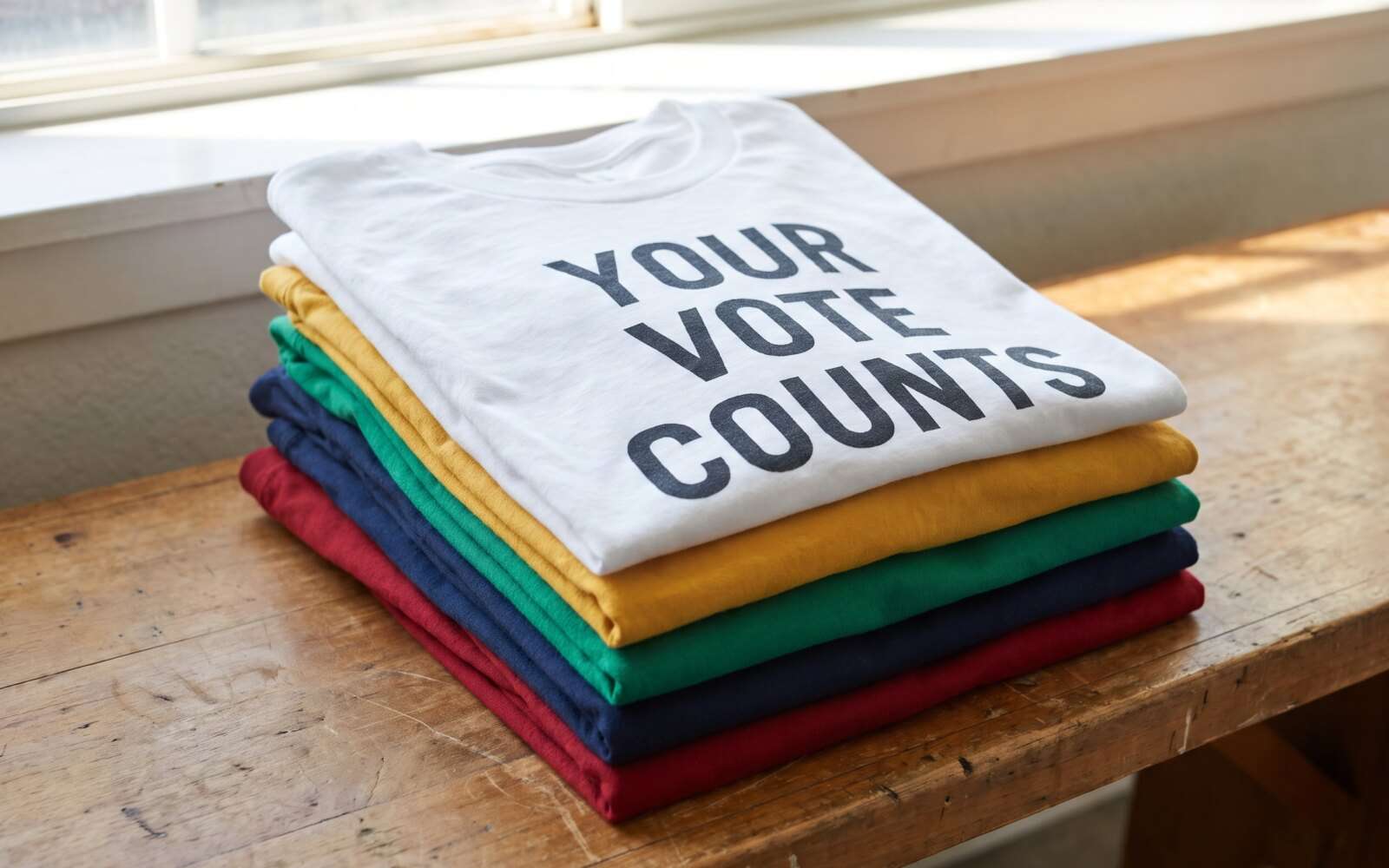
If your shirts are for an election, there is a rule that most printers do not mention: election material has to carry an imprint naming the printer and the promoter, and the printer commits the offence as well. This page explains what that means for clothing, and how we handle it.
What the law says about imprints
Under section 110 of the Representation of the People Act 1983, any material intended to promote or procure the election of a candidate must state the name and address of the printer, the name and address of the promoter, and the name and address of any person on whose behalf it is published. It goes on the face of a single-sided item and on the first or last page of anything longer. The Act says “print” means print by whatever means, and the printer commits the offence as well as the promoter. The fine is at level 5, which has been unlimited since 12 March 2015. Material for parties and non-party campaigners is covered by section 143 of the Political Parties, Elections and Referendums Act 2000 in the same way.
Since 1 November 2023 the Elections Act 2022 has also required a digital imprint on paid political advertising online and on organic material from parties, candidates and registered campaigners: the promoter and, where relevant, who it is on behalf of, on the material itself or one click away where it will not fit. The Electoral Commission publishes the statutory guidance and updates it; the version we checked was January 2026.
Does a t-shirt count? Nobody has said. We checked the Electoral Commission’s guidance pages through 2025 and found nothing about clothing, badges or mugs, and no court case on the point. Our honest reading is that a shirt made to promote a candidate is arguably election material, and that a photo of it posted by the candidate is digital material needing a digital imprint on the post. So for anything intended to promote a candidate or a party at an election we recommend an imprint, and we make it easy to add.
How we handle it
An imprint that does not ruin the design
A small transfer inside the hem or at the back neck reading 'Printed by Brandum Ltd, Unit 2 Sherrard Works, 1A Sherrard Road, London E7 8DN. Promoted by [name] on behalf of [name]'. Pressed at the same settings as the main print. Ask for it with your quote.
Any registered party, any union, any charity
We do not take sides. A Labour, Conservative, Lib Dem, Green, Reform or independent campaign gets the same price, the same turnaround and the same imprint. Unions and strike funds likewise.
The line we do not cross
Racist, hateful or abusive material, whoever it is aimed at, and whichever side it comes from. Under sections 19 and 29 of the Public Order Act 1986 written material includes any sign or visible representation, and a shirt is one. We refuse, and we say why.
Slogans that name a person
A shirt that names a politician is normal political speech, and we print them. A shirt that makes a statement of fact about a named person that could be defamatory is a different thing, and we will ask you about it before printing; the person who orders it and the person who prints it can both be sued. Ridicule and opinion are fine. Allegations are not, unless you can stand them up.
Confidentiality
We do not tell anyone who ordered what. Campaign orders are treated like any other client’s: the artwork, the count and the delivery address stay between you and us. We will not use a campaign job in our own marketing without asking.
From the studio
Most political printing is not election material at all. It is union branch tees for a rally, a charity's campaign shirts for a march, a community group's slogan for a council meeting. Those need no imprint, and they are printed like any other order: approve by 1pm, collect at 4.30pm if it is small and urgent, 24 to 48 hours for most runs, screen print if it is big and one colour.
Questions campaigns and unions ask us
Do campaign t-shirts need an imprint?
If they are intended to promote a candidate or a party at an election, we recommend one, because the law covers printed election material by whatever means and nobody has ruled that clothing is exempt. We add it as a small inside-hem transfer. Rally, union and protest shirts outside an election do not need one.
What must the imprint say, and where does it go?
The printer’s name and address, the promoter’s name and address, and who it is on behalf of. On a shirt we put it inside the hem or at the back neck, small, in the same print as the design.
Will you print for any party?
Yes, any registered party, candidate or campaigner, at the same price. We refuse hateful material from any side.
Do you print union and strike t-shirts?
Yes. Branch logos, slogans, dates of action. No imprint needed unless it is election material.
Can the slogan name a politician?
Yes. Opinion and ridicule are political speech. A factual allegation about a named person is a defamation risk for you and for us, and we will ask you about it before printing.
Do I need a digital imprint if I post a photo of the shirts?
If you are a candidate, a party or a registered campaigner posting during a regulated period, the post itself may need a digital imprint under the Elections Act 2022. The Electoral Commission’s guidance covers it; the shirt’s own imprint does not satisfy it on its own.
Would you refuse a job for being political?
No. We refuse hateful or abusive material and jobs we think are dishonest, not politics.
Will you tell anyone we ordered?
No. Campaign orders are confidential and we do not use them in our own marketing without permission.
Send the artwork and the date of the action
You will get a proof with the imprint in place if it needs one, a price, and a straight answer on the date.